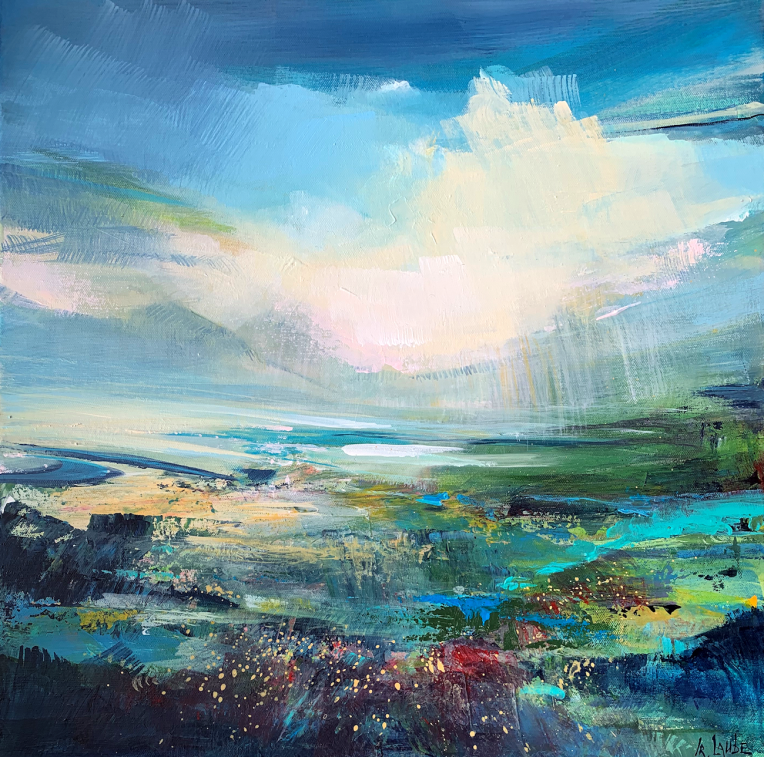
Buba Arabuli’s
Portfolio
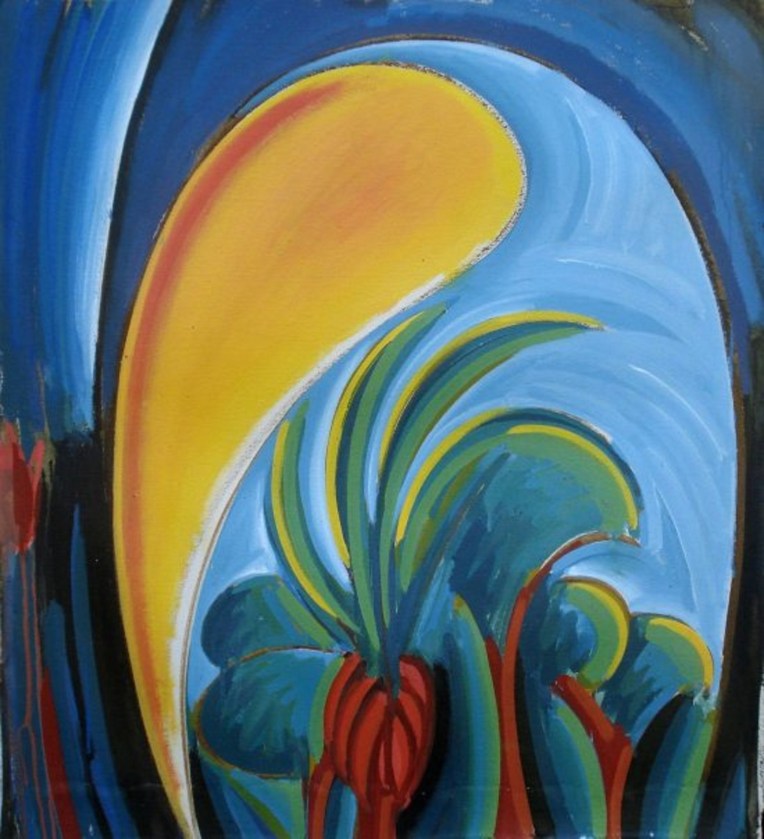
© Buba Arabuli

Early Christian art was not created in a world of famous artists and celebrated collectors. Its makers were usually anonymous craftsmen working within the established traditions of Roman art, while its patrons ranged from wealthy families to bishops and emperors. As Christianity moved from a persecuted faith to an imperial religion, the relationship between artist, commissioner, and artwork changed dramatically.
The artists were largely professionals rather than religious specialists. Sculptors, mosaicists, painters, stonecutters, metalworkers, and builders brought skills inherited from the Roman artistic tradition. Workshops could produce both Christian and non-Christian objects, adapting familiar visual formulas to new subjects. The anonymity of most surviving works tells us more about the social organization of ancient art than about a lack of artistic ability. Even the sculptors who produced Christian sarcophagi such as the Sarcophagus of Junius Bassus worked within sophisticated Roman traditions of carving, composition, and portraiture.
There was no standardized art school for becoming a Christian artist. Training generally belonged to the workshop system, where technical knowledge was acquired through apprenticeship and practice. The artist’s social position could therefore vary considerably, and the surviving evidence rarely allows us to reconstruct individual careers. Signatures are uncommon, making the workshop—not the individual artist—the more visible unit of production.
The patrons were more diverse. Wealthy Christians commissioned sarcophagi and funerary decoration, sometimes using art to express family identity and religious beliefs. Bishops and church communities commissioned architectural decoration, while emperors could provide enormous resources for basilicas and monumental programs. Constantine’s support for Christian architecture transformed the scale of artistic production. At Old Saint Peter’s Basilica, imperial patronage became visibly incorporated into the decoration itself, linking the emperor, the church, and sacred authority.
Rome’s wealthy elite also participated, although their involvement should not be exaggerated. Scholarship identifies senators, emperors, and bishops as major patrons of the late-antique city, but the surviving evidence for aristocratic intervention in Roman churches is surprisingly limited. Patronage could therefore be personal, institutional, familial, or imperial rather than simply “church versus private individual.”
The mosaics of Santa Maria Maggiore, begun in the fifth century, reveal what this system could produce: monumental biblical imagery integrated into architecture and intended for a collective audience. The patron paid for more than decoration; the commission helped shape how Christian history, authority, and belief were made visible.
Early Christian art was therefore a collaboration between skilled makers and powerful commissioners. The artists supplied technical knowledge and visual language; patrons supplied money, buildings, and purpose. Together, they transformed Roman artistic traditions into one of the foundations of Christian art.
By NO MIDDLEMAN ART GALLERY

NO MIDDLEMAN ART GALLERY is an Edge of Humanity Magazine
project created to provide artists with a
COMMISSION FREE / CONTRACT FREE
online platform to sell their creations.
To support our concept please

CURATOR | Joelcy Kay
© Israel Da Costa


One of the remarkable aspects of Early Christian art is that some of its greatest monuments have survived in extraordinary condition. Ranked below by how closely they resemble their original appearance, these sites offer a direct connection to the first centuries of Christian artistic expression.
Location: Ravenna, Italy
Age: c. AD 425–450
Originally built as an imperial mausoleum or chapel, this small brick structure contains one of the best-preserved mosaic programs from the Early Christian world. Its brilliant blue ceiling, covered with golden stars, and richly detailed biblical imagery remain largely intact because the building has undergone few structural changes and the mosaics have required only careful conservation.
For nearly sixteen centuries, it has survived wars, political upheavals, and changing rulers while remaining a place of Christian devotion. Today it provides perhaps the closest experience to standing inside an Early Christian sanctuary.
Location: Ravenna, Italy
Age: Consecrated AD 547
Built during the Byzantine period, San Vitale is renowned for its dazzling mosaics depicting Emperor Justinian and Empress Theodora. Although parts of the building have been restored over the centuries, the famous mosaics remain remarkably close to their original condition.
Constructed as an important center of worship, the basilica later became one of the defining monuments of Byzantine art in Western Europe. It demonstrates how classical Roman building techniques evolved into the more symbolic artistic language of Christianity.
Location: Rome, Italy
Age: 2nd–4th centuries AD
The Catacombs of Priscilla served as underground burial chambers for early Christians during periods when public expressions of the new faith were often restricted. Their walls preserve some of Christianity’s earliest surviving frescoes, including depictions of biblical scenes and one of the oldest known images of the Virgin Mary.
Although humidity and the passage of time have damaged portions of the paintings, much of their original composition remains visible. The catacombs continued to be visited by pilgrims long after burials ceased, preserving an important visual record of early Christian belief.
Location: Rome, Italy
Age: c. AD 350
Built as the mausoleum of Constantina, daughter of Emperor Constantine, Santa Costanza preserves much of its circular architecture and extensive ceiling mosaics. Interestingly, some decorative motifs—such as grape harvesting—reflect Roman artistic traditions while acquiring new Christian symbolism associated with the Eucharist.
Over the centuries the building was converted into a church, helping ensure its continuous maintenance and survival.
These monuments demonstrate that Early Christian art was never intended simply as decoration. Their mosaics, frescoes, and architecture were created to communicate faith, commemorate the dead, and inspire worship. Their exceptional preservation allows modern visitors to encounter not only the artistic achievements of the period but also the spiritual world of the first Christian communities nearly 1,700 years after they were created.
By NO MIDDLEMAN ART GALLERY
NO MIDDLEMAN ART GALLERY is an Edge of Humanity Magazine
project created to provide artists with a
COMMISSION FREE / CONTRACT FREE
online platform to sell their creations.
To support our concept please
CURATOR | Joelcy Kay



 NO MIDDLEMAN ART GALLERY Edge of Humanity Magazine